Mold Testing Nashville, Lab Answers in Plain English
A lab report full of Latin names and spore counts does not help much until someone translates it into a decision. Mold testing Nashville homeowners order through this service comes with that translation: what was sampled, what the lab found, how your indoor air compares with the air outside your front door, and what, if anything, the result should change. This page explains the whole process before you spend a dollar on it.
- Air and surface sampling
- Indoor vs outdoor baseline
- Results explained in plain English
- Independent local providers
Mold testing Nashville: what a lab sample can and cannot tell you
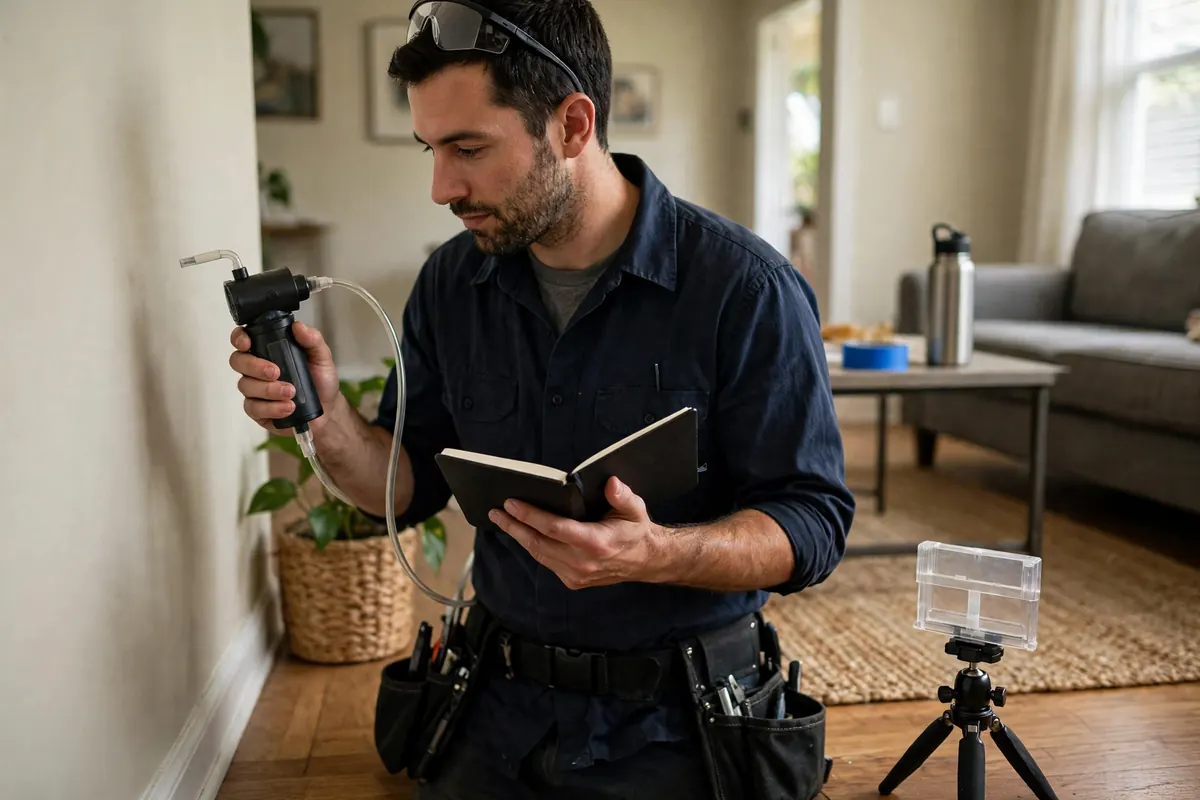
Mold testing in Nashville uses lab samples, usually air cassettes or surface swabs, to name the mold genus and compare indoor spore counts with an outdoor baseline. Testing answers what is present and whether counts look raised. It cannot tell you how to remove the mold, and visible growth usually needs removal whether it is tested or not.
The most common reason Nashville homeowners ask for testing is not visible mold at all. It is the musty smell with no source anyone can find, the closet that keeps spotting, the first floor that smells like the crawl space under it. Nashville's housing stock sets that up: vented crawl spaces under the postwar brick ranches of Madison, Donelson and Antioch stay damp through a humid summer, and the stack effect pulls that air up into the living space. A well placed air sample can confirm the crawl space is seeding the house, which turns a guessing game into a plan.
The second reason is proof. After a removal job, after a flood in Bellevue or along Mill Creek, in the middle of a home purchase or a landlord dispute, someone needs a number from a laboratory instead of an opinion from an interested party. Testing serves both purposes well. What it never does is replace the moisture work: samples describe the air on one day, and only finding and fixing the water source keeps the result true next season.
Three kinds of mold sample
Nearly every mold testing Nashville TN homeowners order uses the first two. The third has a narrow use and a slower clock.
Air sampling
A pump pulls a measured volume of air through a spore trap cassette for a set number of minutes. One cassette runs outdoors as the baseline, and one or more run in the rooms in question. The lab counts and names what landed on each trap, and the indoor counts are read against the outdoor ones.
Surface sampling
A tape lift or a swab is taken straight off the growth or the suspect surface. This answers what is growing in that exact spot, which is the right question for a stain on drywall, a joist in the crawl space, or the dark patch everyone keeps calling black mold.
Culturable sampling
The sample is grown in the lab so living colonies can be identified more precisely, sometimes down to species. It takes a week or more, costs more, and is used when the exact species genuinely matters, usually in a medical or legal setting rather than a home cleanup decision.
What the report actually tells you
A lab report is a comparison, not a verdict. Mold spores are in every breath of outdoor air in Tennessee, so the outdoor cassette is the yardstick: a healthy indoor result looks like the outdoor air, in both the names and the counts, or lower. A result that raises an eyebrow is an indoor count far above outdoors, or an indoor name that does not appear outdoors at all, which points to something growing inside.
There is no official safe number to measure against. Neither federal rules nor Tennessee law set a spore count that divides clean homes from dirty ones, so any company quoting you a hard pass or fail number is inventing it. Reports are read the way inspectors read them: against the outdoor baseline, against the other rooms in the house, and against what the moisture inspection found. The three together are the answer; the lab sheet alone is a third of it. That inspection side is covered on our mold inspection in Nashville page.
- Genus, not always species. Air samples are identified to genus for the common molds. A report can say Aspergillus type spores are raised; pinning the exact species takes culturable sampling and rarely changes a home decision.
- Counts are a snapshot. Spore levels swing with weather, season and whether a door was open. A single calm result does not erase visible growth, and a single high one does not condemn a dry, clean home.
- Dead spores still count. The lab counts what it sees under the microscope, living or not. That is why clearance sampling follows a physical cleaning check: the room must look clean and test clean.
The names on Nashville lab reports
Four names account for most of what Nashville labs report, and none of them should frighten you on sight. All four live outdoors in Tennessee in large numbers. What matters is whether they are growing indoors, which is a moisture question, and how much of them the indoor air carries compared with the street.
Stachybotrys gets its own paragraph because it drives the phone calls. It is the mold behind most black mold worries, it needs material like drywall paper to stay wet for a long time, and it does not show up on air samples as easily as the others because its spores are heavy and sticky. If it is your concern, a surface sample from the growth itself is the reliable route, and our black mold removal in Nashville page covers what happens next.
- Cladosporium. The most common mold indoors and out. Grows on painted wood, window frames and fabrics. Dark in color, which is why so much ordinary Cladosporium gets called black mold.
- Aspergillus. A large family found in soil, dust and damp building materials. Raised indoor counts usually mean something in the home is feeding it.
- Penicillium. Common on water damaged materials and in damp basements. Often travels with Aspergillus on reports, and the lab may list the pair together.
- Stachybotrys. The chartarum species behind the black mold headlines. Needs long term wet cellulose, grows slowly, and is a sign the material has been soaked, not a reason to panic.
When testing is worth paying for, and when it is not
A test is worth the fee when the result changes a decision
- Clearance after a removal job: proof, from an independent sampler, that the work is done and the air is back in line with outdoors.
- A musty smell or symptoms pattern with no visible source: sampling can point at the room or the crawl space hiding the growth.
- A health conversation already open with your doctor, who wants to know what is in the air at home.
- A real estate purchase, a landlord dispute or an insurance claim, where a lab report carries weight that an opinion does not.
- Before a large removal quote, when nobody has yet shown you moisture readings that justify the scope.
And it is usually money wasted when the growth is right there in front of you. A black patch on wet drywall needs the drywall out and the leak fixed whether the lab calls it Stachybotrys or Cladosporium; the removal process, the containment and the price band are the same. Spend the testing budget on clearance at the end instead of identification at the start. If you are at that decision point now, read the removal process on the mold removal in Nashville page, then the published ranges on the mold remediation cost guide, and you will know more than most people who sign a scope this week.
The test should not come from the person selling the cure
Homeowner forums repeat one piece of advice more than any other in this trade: ask someone else besides the remediation company. Testing is where that advice bites hardest. A company that tests your home and then prices the removal has a financial interest in what the test finds, and a company that clears its own finished job is grading its own work. Neither arrangement means the result is false. Both mean you cannot fully lean on it.
The cleaner pattern is separation. An independent tester samples and reports; a remediation provider does the work; clearance sampling, if you want it, comes from the testing side again. This service connects you with independent local providers across Davidson County, and the report you receive is the lab's document, not a summary written by the seller. The rest of the service, from inspection through removal, is set out on the mold remediation Nashville homepage.
Air quality testing in Nashville homes, honestly scoped
Many people searching for air quality testing in Nashville are really asking one question: after a mold problem, is the air in this house back to normal? A mold air sample answers part of that. It counts the airborne spores in a room and compares them with an outdoor sample taken the same day. If the indoor count sits close to the outdoor count and the species match, the air is carrying a normal load. If indoor counts run far above outdoors, or water-damage species show up indoors that are absent outside, something inside is still feeding spores into the air.
What the sample does not measure matters as much. It says nothing about dust, pollen, pet dander, cleaning chemicals or carbon monoxide, and one sample is a snapshot of an hour, not a verdict on a house. Used well, air quality testing is the verification step: after remediation, it is the clearance evidence that the work brought the air back to a normal background. Used alone, before anyone has looked in the crawl space or the attic, it is a number without a cause. The looking comes first, which is why testing on this site is paired with a proper mold inspection.
Common questions about mold testing
Do I need a mold test if I can already see the mold?
Usually not. Visible growth already answers the question that matters, which is what has to be removed, and a lab result naming the genus rarely changes the removal plan. Testing earns its fee when the result would change a decision: proving a finished job is clean, tracking down a smell with no visible source, or settling a dispute between a buyer and seller, a tenant and landlord, or a homeowner and an insurer.
What does a mold lab report actually tell me?
Three things. The genus of mold found, in plain names like Cladosporium, Aspergillus or Penicillium. The spore count in your indoor air or on the sampled surface. And how that count compares with the outdoor sample taken the same day, which is the baseline every reading is judged against. It does not give a health verdict, and for common molds it names the genus, not the exact species.
What is clearance testing, and when do I need it?
Clearance testing is the independent check after remediation, done before containment comes down or right after. The sampler confirms the area is visibly clean and that indoor counts sit in line with outdoors. Homeowners ask for it for the same reason they wanted an independent inspection: the company that did the work should not be the only voice saying the work is done. It is the proof that closes an insurance file or a real estate dispute.
Should the company removing the mold also run the tests?
Better not, where you can avoid it. A remediator testing their own job is marking their own homework, and testing before the job by the company that will price the removal carries the same conflict the other way. The pattern forums keep recommending is separation: one party tests and reports, another remediates, and clearance comes from the testing side. If one company does both, insist the samples go to an outside lab and that you receive the full lab report.
Can a mold test tell me if my symptoms come from mold?
No. A test describes the building, not your body. It can say mold counts in a bedroom look raised against outdoors, which is a fair reason to fix the moisture and clean the room. Whether your symptoms come from mold, allergies, a virus or something else is a question for your doctor, who may well ask what the test found. Bring the report to that conversation; do not let a lab report make a medical call.
How long do mold test results take?
Sampling itself takes under an hour in most homes. The wait is the lab. Standard lab turnaround runs a few business days, and rush service costs more. Count it into the calendar honestly: a removal job might take one to five days of active work, and the calendar from first sample to a clearance report in hand commonly runs five to ten days once drying and lab time are included.
Need a lab answer you can act on?
That is Nashville mold testing as it should be: independent, explained, and tied to a decision. Reach out now and get connected with a local provider who will sample properly, send the cassettes to a real lab, and explain the report against your outdoor baseline in plain English. Not sure whether you need a test or an inspection first? The mold inspection page will help you decide.
Get Help Now