Black Mold Removal Nashville, Handled Calmly and Contained
Finding black growth spreading across a wall is frightening, and the internet makes it worse. Black mold removal Nashville homeowners get through this service starts with the facts: most black colored mold is not the species in the headlines, the real problem is the water feeding it, and the fix is a contained, methodical job rather than an emergency evacuation. This page explains what black mold is, what the health evidence actually says, and how a proper removal runs.
- Containment and HEPA first
- Balanced health facts, no scare copy
- Source fixed, not just the stain
- Independent local providers
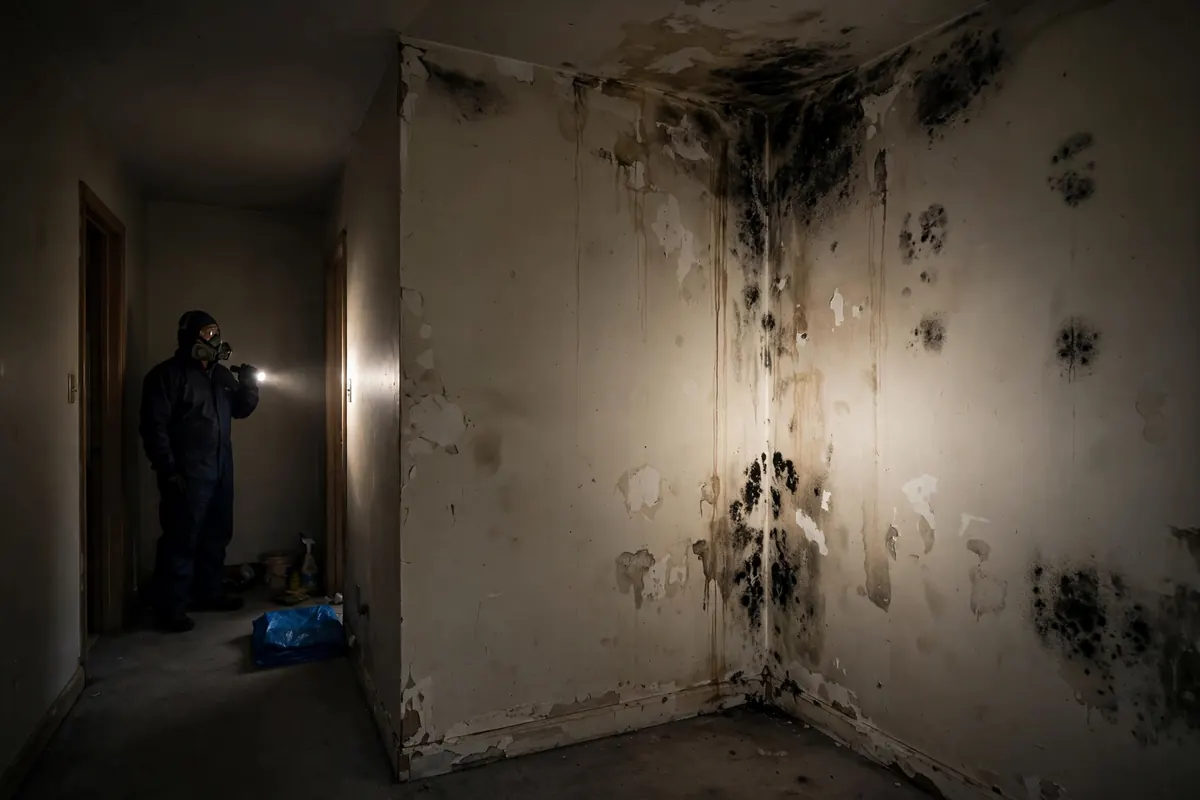
Black mold removal Nashville: what the job actually involves
Black mold removal in Nashville is the same careful job as any mold work: contain the area, remove the growth and the wet material feeding it, clean what remains, and fix the water source. Most black colored mold is not Stachybotrys, and color alone never identifies a species. Only a lab sample can do that.
In Nashville, black mold turns up in predictable places. It grows on the paper backing of drywall that stayed wet after a plumbing leak, in crawl spaces under the postwar brick ranches of Madison, Donelson and Antioch after a condensate line has dripped all summer, and along the flood legacy lines of Bellevue and the Mill Creek corridor, where the May 2010 water got into wall systems that were never fully opened and dried. It is a slow mold. By the time a colony is large and dark, the material behind it has usually been wet for weeks or months, which is why the removal scope is about the wall, not the surface.
That history cuts both ways. It means the growth did not appear overnight, and it will not be fixed by a spray bottle this weekend. It also means you have time to do this properly: get the area identified, get the scope in writing, and have the work done once, under containment, with the water source corrected in the same job.
What black mold is, and what it is not
The name in the headlines is Stachybotrys chartarum. It is a slow growing mold that feeds on cellulose, the paper facing on drywall, ceiling tiles, and wood that stays wet for a long time. It is genuinely common in water damaged buildings, and it is also only one of many molds that grow black or dark green. Cladosporium, the most common mold in homes, is dark. So are several Aspergillus species and the mold on a bathroom window frame that has been there for years without making anyone ill.
Color is a description, not an identification. Nobody, including an experienced remediation crew, can name a species by looking at it, and any company that tells you over the phone that you definitely have the toxic kind is selling urgency, not information. A surface sample sent to a lab settles the question in a few days, which is what mold testing in Nashville is for, including black mold testing Nashville TN homeowners ask for when a purchase or a health conversation depends on the answer. The good news buried in all this: the removal process is the same careful process whatever the lab calls it.
- Stachybotrys needs time and water. It colonizes material that stays soaked, which is why it signals a long running leak or a flood that was dried badly. Finding it means finding the water history.
- Most black patches are not Stachybotrys. Window frames, shower grout and painted wood across Nashville grow dark Cladosporium every humid summer. Annoying, worth cleaning, not a headline.
- Only a lab sample names it. A tape lift from the growth itself is the reliable sample. Air tests can miss Stachybotrys because its spores are heavy and do not float far.
Answered straight, without the panic
What is supported
Mold exposure in a home can irritate eyes, skin and airways, and it can set off allergies and asthma attacks. The people it matters most for are infants and young children, older people, and anyone with asthma or a weakened immune system. The pattern sufferers describe is consistent: symptoms that ease when they leave the building and return when they come back. If that is your household, the building needs fixing and the symptoms need a doctor, in that order or at the same time.
What is not supported
The claim that black mold causes a distinct toxic mold syndrome in otherwise healthy people. The Cleveland Clinic states it plainly: there is currently no scientific proof for toxic mold syndrome. Panic content online runs far ahead of that evidence, and fear is a poor basis for signing a five figure scope. Black mold remediation Nashville homeowners are sold is often wrapped in exactly that fear. The crew's actual job is the building: remove the growth, fix the water, verify the cleanup. Diagnosis belongs to your doctor, who may ask what was found in the home, and a lab report is a reasonable thing to bring to that appointment.
This page is information about buildings, not medical advice. If anyone in the home is unwell, a physician is the right call, and urgent symptoms are an urgent call.
Where black mold grows in Nashville homes
- Drywall paper after slow leaks. A supply line or toilet seal leaking inside a wall keeps the paper backing wet for weeks. The paint side may show only a shadow while the cavity side carries the colony.
- Crawl spaces under vented ranches. Madison, Donelson and Antioch crawl spaces breathe humid summer air, and a dripping condensate line or plumbing joint grows mold across joists and subfloor that the stack effect then pulls into the first floor.
- Behind cabinets on exterior walls. Kitchen and bathroom cabinets trap still, cool air against the wall. Condensation and small leaks feed growth nobody sees until the cabinet comes out or the smell gives it away.
- Flood legacy walls. Homes in Bellevue and along Mill Creek that took water in May 2010 and were dried from the face only can still carry growth inside wall systems that were never opened.
- HVAC drip pans and duct lining. A clogged condensate drain overflows into the pan and wets the lining nearby. Growth there has a direct route into every room the system serves.
Black mold removal, step by step
Assess, and sample if it matters
The area is measured and the moisture mapped first. A lab sample is taken when the species name would change a decision, for a purchase, a claim or a health file. Otherwise the scope proceeds on what the moisture readings show.
Contain the work area
Plastic sheeting seals the area and a HEPA air scrubber runs under negative pressure, so spores disturbed by the work are captured instead of drifting into the rest of the house. This is the step DIY jobs skip, and the reason they spread the problem.
Remove what cannot be cleaned
Porous material carrying growth comes out: affected drywall, insulation, carpet pad and swollen trim, bagged inside the containment before it crosses the house. Hard surfaces like framing, concrete and tile stay and are cleaned.
HEPA clean everything left
Surfaces are HEPA vacuumed, wiped down and vacuumed again, working from the contained area outward. The point is removing the settled spores as well as the visible colony, so the room does not reseed itself.
Dry it and fix the source
The leak, condensate fault or flood path that fed the growth is corrected, and the structure is dried to a measured standard. Removal without this step is a subscription: the mold returns to the same wet material.
Verify before rebuild
A visual check confirms the area is clean and dry, and clearance sampling can confirm the air matches the outdoors before drywall goes back. Rebuild, paint and trim follow only after the area passes.
Why bleach keeps failing on black mold
Bleach has a surface it works on: tile, glass, sealed counters. On those, it cleans the growth it touches. Drywall and wood are the opposite case. The visible stain sits on the surface while the growth roots into the porous material beneath, and bleach, which is mostly water, cannot follow it there. The water soaks in and feeds the roots, the chlorine stays on top and fades the color, and a few weeks later the patch is back, darker for having been fed. Stain removing sprays repeat the same trick with better marketing: a lighter stain, a living colony.
This is why a professional black mold removal company Nashville homeowners hire will tell you that established growth in drywall or insulation is a removal job, not a cleaning job, and why quotes for the same bathroom can differ so much. One price is for spraying the surface. The other is for opening the wall, taking out what is feeding the problem, and drying what remains. Only one of them is finished when the crew leaves. For the full picture of how removal work is scoped and priced, read our mold removal in Nashville page and the mold remediation cost guide, where the black mold removal cost Nashville TN homeowners actually pay is set out in published ranges.
What drives the price of a black mold job
Published Nashville benchmark ranges put most mold jobs between $1,400 and $5,500, with a middle figure around $2,200. Black mold work is priced inside that same frame, by three things: the area involved, the material that has to come out, and how long the material stayed wet, which decides how deep the growth runs. A contained bathroom wall can sit near the bottom of the range. A crawl space or a whole wall system that needs opening, drying and rebuilding sits higher, and rebuild is often a separate line from removal.
Read any quote for what it includes and what it leaves out. Homeowners comparing quotes keep discovering that one bid covers containment and disposal while another is cleaning only, or that testing and rebuild were never in either number. The scope should state the containment, the materials to be removed, the source repair and whether clearance testing is included, all in writing, before work starts. The mold remediation Nashville homepage sets out how this service works, and the cost guide breaks the ranges down by location in the home.
Common questions about black mold
Is black mold dangerous?
Less dramatic than the internet version, and still worth taking seriously. Mold in a home can irritate airways and set off allergies and asthma, and it matters most for infants, older people and anyone with a weakened immune system. But the Cleveland Clinic notes there is currently no scientific proof for the idea of a toxic mold syndrome. If you have symptoms, see a doctor. If you have mold, fix the moisture and remove it. The two tracks run side by side.
How do I know if the black mold in my house is Stachybotrys?
You cannot tell by looking, and neither can a remediation crew. Many common molds are black or dark green, including Cladosporium, which grows on painted wood and window frames all over Nashville. Stachybotrys chartarum needs material that stays wet for a long time, like soaked drywall. The only way to name it is a lab sample, which is what our testing page covers. The removal job is the same careful process either way.
Can I remove black mold myself?
Sometimes, at the small end. The guideline homeowners use, drawn from EPA advice, is about ten square feet: a patch smaller than that, on a hard surface, with the moisture already fixed, is a reasonable DIY cleaning job with ventilation and a proper mask. Bigger areas, mold inside drywall or insulation, anything tied to your HVAC, and crawl space growth belong to a pro with containment. DIY without containment is how a one room problem becomes a whole house complaint.
Does bleach kill black mold?
On a hard, non porous surface like tile, bleach can clean the surface growth. On drywall, wood and other porous materials it fails, and this is the myth that keeps mold coming back. Bleach sits on the surface while its water soaks in and feeds the growth rooted deeper in the material. The stain fades, the colony stays, and the patch returns. Porous material with established growth has to come out; there is no spray that changes that.
What does black mold removal cost in Nashville?
Published Nashville benchmark ranges put most mold jobs between $1,400 and $5,500, with a middle figure around $2,200, and black mold work is priced inside that same frame: by area, by material removed, and by how long the material stayed wet. A small bathroom patch sits at the low end; a crawl space or a whole wall system costs more. Our cost guide breaks the ranges down by location in the home and shows what quotes include and leave out.
Will insurance pay for black mold removal?
Only when the mold follows a covered event, like a burst pipe the policy already pays on, and even then most policies cap mold work at a sub limit, commonly $1,000 to $10,000 per occurrence. Mold from a slow leak, high humidity or a flood usually sits outside cover, which is why insurers ask how long the material was wet. Document the source with dates and photos from the day you find it; that record is the claim.
Black mold in the house? Get it measured, not feared.
Reach out now and get connected with a local provider who will map the moisture, contain the work, fix the source and verify the result. If you want the species named first, the mold testing page explains the lab side, and the mold inspection page covers the full investigation.
Get Help Now