Basement Mold Remediation Nashville, From Damp Walls to a Dry Basement
A basement is where Nashville homes keep their moisture, and where it announces itself last: a musty smell at the bottom of the stairs, white fuzz on stored boxes, dark growth creeping up the drywall. Basement mold remediation Nashville homeowners can rely on starts with the water, not the stain: find how moisture is getting in, fix that path, then remove what cannot be cleaned and dry what remains until the readings hold. This page walks through the job in that order, and connects you with independent local providers who do the work.
- Moisture source found and fixed first
- Itemized clean versus remove decisions
- Drying verified by moisture readings
- Independent local providers
Why basement mold is a moisture job first
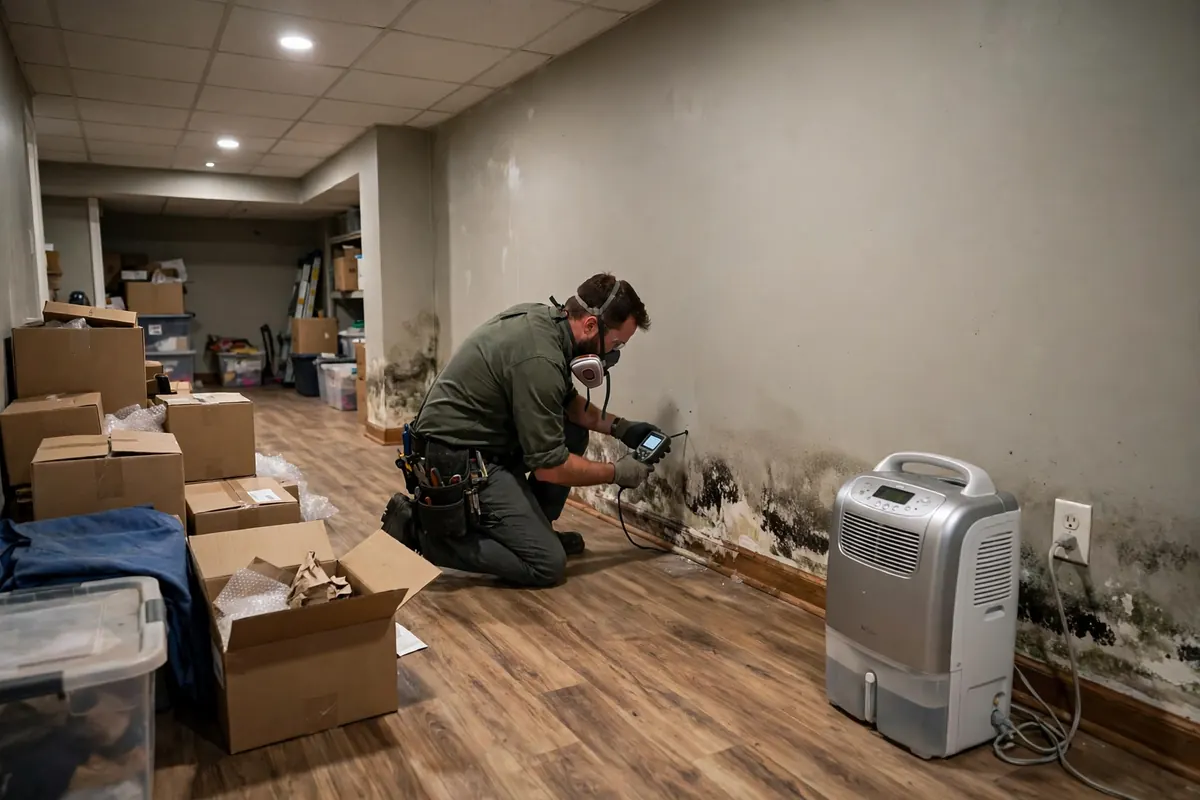
Basement mold remediation in a Nashville home starts with the moisture, not the mold: the leak, seepage or failed sump is fixed first, then contained removal takes out what cannot be cleaned, hard surfaces are scrubbed and treated, and the basement is dried and dehumidified until readings hold. Growth removed without source work grows back.
Nashville basements sit in Tennessee clay, and clay is the whole story. It holds water against foundation walls after every heavy rain, and this city gets about 49 inches of rain a year. Block and poured foundations wick that moisture inward slowly, so a basement can be damp for months before growth shows on the surface. Add the summer pattern, hot humid air entering a cool below-grade space and condensing on walls and ductwork, and the basement is working against its owner from two directions at once.
The housing stock decides the details. Split-levels across Antioch, Hermitage and Donelson have half-buried lower floors that behave like basements on the downhill side. Older homes in East Nashville and Inglewood pair full basements with aging plumbing and old drain tile. Newer builds toward Mount Juliet and Smyrna add finished lower levels with carpet and drywall that hide moisture until the smell arrives. The remediation sequence is the same; what gets removed, and what the fix costs, is not.
Basement mold remediation Nashville: finished and unfinished
Unfinished basements
Exposed block or poured walls, bare concrete floors, visible joists. Growth here is usually on the walls, the bottom of the stair framing, stored contents and the joists above. The work is mostly cleaning and treatment: hard surfaces scrub and treat well, and there is little material to demolish. The bigger questions are the moisture path, seepage, condensation or a plumbing leak overhead, and whether the space needs a drainage fix before cleaning means anything.
Finished basements
Drywall, carpet, paneling and built-ins turn a moisture problem into a demolition decision. Mold travels up the back of drywall long before it shows on the painted face, so inspection includes baseboard removal and meter readings, sometimes a small test opening, before anyone quotes. Carpet and pad that have grown mold come out. The rebuild that follows remediation is a separate scope and a separate price, and any quote that blends the two into one number deserves a second look.
- Usually cleaned in place. Concrete and block walls, sealed stone, metal shelving, glass, and structural lumber that is surface-growth only. Cleaned, treated and dried, then verified.
- Usually removed. Moldy drywall and insulation, carpet and pad, swollen particleboard, cardboard storage and upholstered furniture that sat in damp. Porous material cannot be cleaned through its depth.
- Judged piece by piece. Hardwood, books, clothing and keepsakes. Cleaning costs are weighed against value, and anything released as a loss is photographed and listed first, for your records and any claim.
- Always addressed. The moisture source. A remediation scope that does not name it, in writing, is a scope for doing this job twice.
Sump failures, foundation moisture and the usual suspects
Most basement mold traces back to one of four paths. Foundation seepage, where groundwater pushes through the wall and floor joint after storms, worst in clay soil and in the low ground along Mill Creek and Richland Creek. Sump and drain failures, where a pump dies quietly or a drain line clogs, and the pit overflows into the room. Plumbing from above, a slow supply or drain leak in the floor system that drips for weeks into a ceiling cavity. And condensation, where summer humidity condenses on cool basement surfaces and uninsulated ductwork, no leak required.
Each path has a different fix, and the fix belongs in the conversation during the inspection, alongside the mold inspection findings and moisture readings. Seepage points toward drainage, grading and gutters. A failed sump points toward a pump, a check valve and often a battery backup. Condensation points toward dehumidification sized for the space and insulation on the cold surfaces. When the moisture is clearly coming from under the foundation or from a connected crawl space, the honest answer is that basement work alone will not hold, and the job becomes the conversation covered on our crawl space mold remediation page.
Inspect and meter
Walls, floor joints, joists and contents are checked, with moisture readings that map how far the damp has traveled beyond the visible growth.
Fix the source
The leak, sump or seepage path is repaired, or the scope says plainly which trade repairs it, before removal begins.
Contain and remove
The work zone is sealed, damaged porous material comes out in bags, and hard surfaces and framing are cleaned and treated.
Dry until it holds
Dehumidifiers sized for a below-grade space run until readings hold at normal levels, the standard that separates a dry basement from a temporarily dry one.
Drying that lasts, not drying that photographs well
A basement can feel dry in a weekend and still be wet where it counts: inside the block cores, under the floor slab edge, in the bottom plate of the framing. That is why the end of a basement job is a set of numbers, not a sniff test. Moisture readings on the same points measured at the start, holding at normal levels over consecutive checks, are what close the work. For most Nashville basements the lasting fix also includes a dehumidifier sized for below-grade space, not a small household unit, holding the air under 50 percent humidity through the summer. If a provider cannot tell you what readings they measured and what they are aiming for, the drying part of the scope is a guess, and the mold will grade it.
Common questions about basement mold
Does everything in a moldy basement have to be ripped out?
No. Porous materials that mold has grown into, typically the bottom of drywall, carpet and pad, paneling and cardboard storage, usually come out, because cleaning cannot reach growth inside them. Hard surfaces are a different story: concrete, block, sealed stone, metal and glass clean well, and structural wood is cleaned and treated rather than replaced in most cases. A scope that removes everything is as suspect as one that removes nothing. The line is the material, judged piece by piece, and it should be itemized in writing.
Why does mold keep coming back in my basement?
Because remediation removed the growth and nobody fixed the water. Basements take on moisture through foundation walls, floor joints, failed sumps and humid summer air condensing on cool surfaces. If the moisture path is still open, new growth is a matter of weeks, not bad luck. A proper basement job names the source in the scope, fixes it or tells you plainly which trade has to, and dries the space to readings that hold before the work is signed off.
Is it safe to store things in the basement after remediation?
Yes, with two changes from how most basements are used. First, store in sealed plastic bins, not cardboard, which is mold food the moment it gets damp. Second, keep storage off the floor and a few inches off the walls, so air moves and a small leak shows itself before it soaks a row of boxes. If the basement's humidity is controlled, stored household items stay fine. If it is not, the remediation was not finished.
How long does basement mold remediation take?
A typical unfinished basement is two to four days of active work: containment, removal of damaged material, cleaning, and drying equipment running until moisture readings hold. A finished basement runs longer because there is more material to open and more to put back, and rebuild, new drywall, flooring and paint, is a separate stage after clearance. Ask for the remediation timeline and the rebuild timeline as two numbers, the same as any other restoration job.
Does homeowners insurance cover basement mold?
Only in narrow circumstances. Mold that follows a covered sudden event, a burst pipe that is reported promptly, may be covered up to the mold sub-limit in the policy, which commonly runs from $1,000 to $10,000 per occurrence. Seepage through a foundation, a failed sump without a sump endorsement, and slow humidity damage are usually excluded as gradual or maintenance problems. The discovery date and prompt documentation matter, so photograph the basement before anything is moved.
When is a basement problem actually a foundation or crawl space problem?
When the moisture is coming through or under the foundation itself: water staining at the wall and floor joint, efflorescence on the block, a sump that runs constantly, or a neighboring crawl space that shares the same wet soil. Remediation cleans the basement, but drainage, grading, gutters and crawl space moisture decide whether it stays clean. A good provider will say so during the inspection and put the handoff in writing rather than sell you a second remediation next year.
Musty smell at the bottom of the stairs?
That smell is the early stage, and it is the cheap stage. Reach out now to connect with a local provider who will find the moisture source before the drywall makes the decision for you. Start from the mold remediation Nashville homepage for the full service, or read how to judge any firm in our guide to mold remediation companies in Nashville.
Get Help Now