Mold Removal Nashville That Starts With the Moisture
Mold removal Nashville homeowners actually need is not a spray and a wipe. It is a physical job: the growth, and the drywall, insulation or carpet it has rooted into, come out of the house under sealed containment, while cleanable surfaces are scrubbed down to sound material and the air is filtered the whole time. This page explains how removal works surface by surface, where the do-it-yourself line honestly sits, and how this service connects you with independent local providers who do the work.
- Containment before anything is cut
- Porous material out, hard surfaces cleaned
- Contents inventoried for your claim
- Independent local providers
What mold removal actually involves
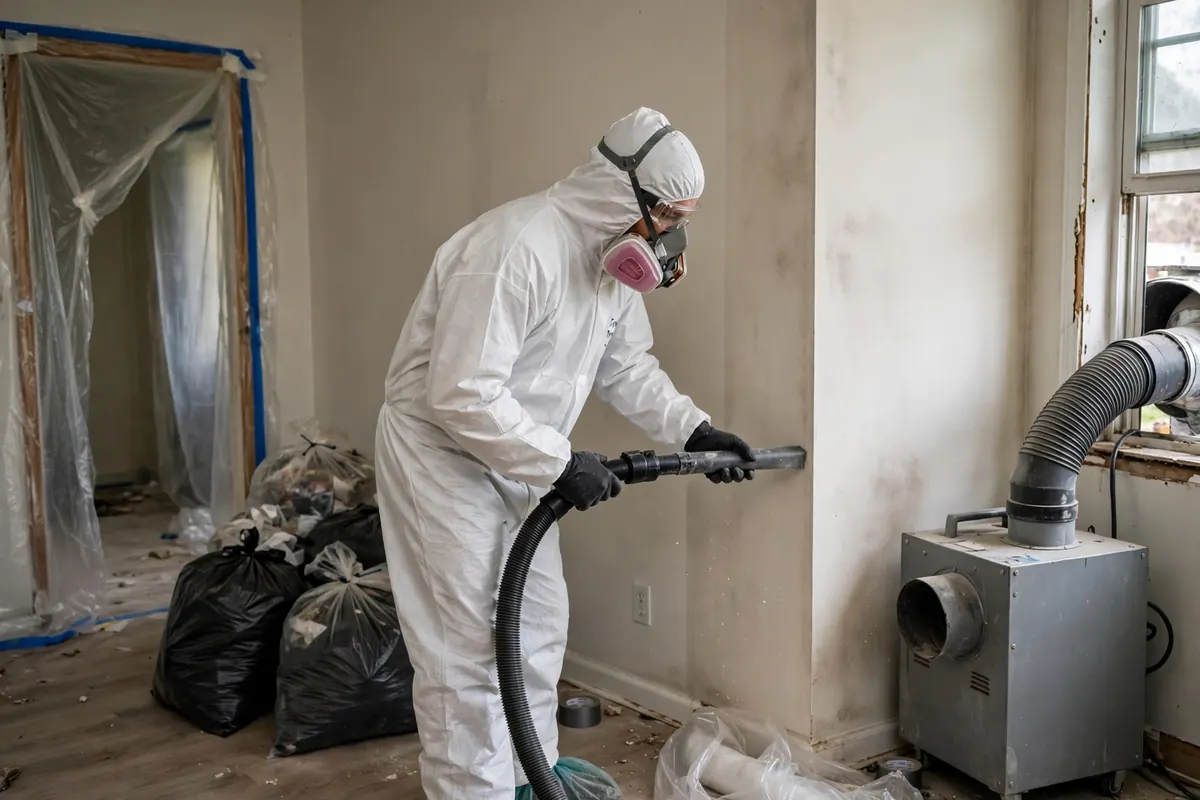
Mold removal in Nashville means physically removing growth and the material it has rooted into, under containment, with HEPA filtration, then cleaning what remains. On hard surfaces the mold is scrubbed and treated away; on drywall, insulation and carpet it comes out with the material. Removal without fixing the moisture is a temporary clean, not a cure.
Most mold clean up Nashville calls start with the same confusion: the homeowner has read that mold can be killed with a spray, and a company has quoted demolition, and the two stories do not match. Both are partly true, on different materials. Mold is a living colony with roots, called hyphae, that grow into whatever it sits on. Kill the surface of a colony on tile and the job is done, because there is nothing to root into. Kill the surface of a colony on drywall and the roots stay inside the paper and gypsum, ready to regrow the first time humidity rises. That single fact, porous versus non-porous, decides almost every removal method on this page.
It also explains the honest limit of the whole trade. Spores are part of normal air, indoors and out, and no removal makes a house sterile. The goal a careful provider works to, under the ANSI/IICRC S520 standard, is a home returned to a normal fungal condition: no active growth, no damp material feeding it, and air no dirtier than the air outside. Anyone promising zero mold forever is selling words, not work.
Removal is the middle of remediation
Search for mold removal in Nashville and you will find the two terms used as if they were rival services. They are not. Remediation is the full discipline: inspect, contain, remove, clean, verify, and fix the moisture. Removal is the loudest day inside it, the day the bags come out. The distinction matters when you read quotes, because a removal-only price quietly drops the inspection that sizes the job, the containment that protects the rest of the house, and the moisture repair that decides whether you pay twice.
Our mold remediation Nashville homepage lays out the full six-step process. This page stays on the removal step itself: what comes out, what gets cleaned, and how a careful crew keeps a dirty job from becoming a whole-house problem.
- Inspection before removal. The area is measured and moisture readings find the edges. Mold you can see is often the smaller half of the colony.
- Containment during removal. Plastic seals, negative air pressure and HEPA filtration run while anything is disturbed. This is the step DIY jobs cannot copy with a box fan.
- Moisture repair after removal. Nashville mold removal that skips the leak, the condensate line or the crawl space humidity has an appointment with the same wall next season.
What comes out, and what gets cleaned
A removal scope is really a list of materials, each with a verdict. The crew works through the affected area item by item, and the verdicts follow one rule: if mold has rooted into it and it cannot be cleaned to sound material, it comes out, bagged inside the containment so nothing sheds spores on the way through your house.
Wood framing is the judgment call homeowners ask about most. Joists and studs are structural, so they are cleaned rather than removed wherever the wood is sound: HEPA vacuuming, scrubbing or sanding the growth off the surface, then treatment and drying. Only rotted wood, where the fibers themselves have broken down, gets cut out. Under a Nashville house, that surface work is most of what our crawl space mold remediation page is about.
- Drywall and insulation. Porous and rooted through. They come out, cut back to clean material beyond the visible growth, and are bagged in the containment.
- Carpet and pad. Nearly impossible to clean once mold is in the backing. Carpet in the growth area is removed; hard flooring underneath is cleaned and dried.
- Wood framing. Cleaned in place when sound: HEPA vacuum, scrub or sand, treat, dry. Replaced only where rot has weakened it.
- Concrete, block and tile. Non-porous at the surface. Scrubbed, treated and dried. Grout lines may need cutting out where growth runs deep.
- Glass, metal and sealed stone. The easy wins. These clean fully and early, before residue and moisture start their own damage.
- HVAC and ductwork. Mold in the air handler or flex duct spreads spores house-wide. Flex duct is usually replaced; the handler and rigid duct are cleaned as their own sub-job.
Mold removal Nashville: the job, step by step
Size the job
The visible growth is measured, moisture readings find the wet material behind it, and the scope lists every material with its verdict before work starts. If the source is unclear, an inspection comes first.
Seal the containment
Plastic barriers isolate the work area, the HVAC vents inside it are sealed, and a negative air machine with HEPA filtration keeps air flowing into the zone, never out of it.
Remove and bag
Moldy porous material is cut out and bagged inside the containment. Bags leave by the shortest route to the truck, not through your clean rooms.
Clean what stays
Framing and hard surfaces are HEPA-vacuumed, scrubbed and treated. Then the whole zone is HEPA-vacuumed again, because settled spores are still a load the air does not need.
Dry and verify
The area is dried to normal moisture readings. On larger jobs, clearance testing by an independent tester confirms the air is back to a normal condition before rebuild.
Fix the source
The leak is repaired, the fan vented outside, the crawl space humidity handled. Removal without this step is a countdown to doing it again.
The 10 square foot rule, honestly applied
The EPA guidance homeowners quote most is simple: mold covering less than about 10 square feet, roughly a three foot by three foot patch, on a hard surface, is a reasonable do-it-yourself job. Scrub it with detergent and water, dry it completely, and fix the moisture that fed it. No special products, and specifically not bleach on anything porous, since the water in the mix feeds the roots the bleach never reaches.
Past that line, the problem is not effort, it is physics. Demolition releases spores in clouds, and without containment and filtered negative air they settle across the house. Forum threads are full of the pattern: a homeowner opens a moldy wall on a Saturday, and by the next month is paying a professional to clean three rooms instead of one. The cheap job became the expensive one.
Call a professional when
- The patch is bigger than about 10 square feet, or keeps growing
- Mold is inside a wall, ceiling, floor or the HVAC system
- The water came from a toilet, sewer or flood (contaminated sources)
- Anyone at home has asthma, allergies or a weak immune system
- You smell mold strongly but cannot find it
- The property is a rental, or a sale or claim needs paperwork
One more honest case: mold removal Nashville TN jobs in homes being sold usually need documentation a DIY clean cannot produce.
Mold and mildew removal Nashville: two words, two jobs
Mildew is the easy half
What most people call mildew is surface mold growing on damp tile, grout, shower caulk and window frames: flat, powdery, and living on the surface film rather than inside the material. It scrubs off with detergent and effort, and it stays off if the room dries out between uses, which usually means the exhaust fan runs during showers and for a while after. Mildew becomes a removal job only when it is the visible tip of something deeper, like a slow leak wetting the wall behind the tile. A provider who treats every shower stain as a remediation project is upselling; one who checks for the leak first is doing the job.
Contents: what happens to your things
Belongings in the work area are inventoried, then cleaned in place, packed out for cleaning, or recorded as a loss. Hard items clean well. Porous items, upholstery, mattresses, stuffed toys, paper, are judged by how long they sat in the growth and what they are worth, because cleaning a cheap rug costs more than the rug. Sentimental items get individual calls, and the inventory list doubles as your insurance record. Nothing should be thrown away without being listed first.
Tennessee licensing, briefly: there is no standalone mold license in this state. Work from $3,000 to $24,999 requires a home improvement license, and work over $25,000 requires a contractor license with the S-Mold designation. Verify any provider at verify.tn.gov before you sign, and our companies guide explains what else to ask.
Common questions about mold removal
What is the difference between mold removal and mold remediation?
Removal is one step inside remediation. Removal takes the visible growth, and any material it has rooted into, out of the house. Remediation is the whole job: inspection, containment, removal, cleaning, verification, and fixing the moisture source so the growth does not return. A company selling removal alone, with no moisture plan, is selling the middle of the job. Since mold spores exist in normal indoor air everywhere, honest providers talk about returning a home to a normal condition, not sterilizing it.
Can I remove mold myself?
For small areas, often yes. The EPA draws the line at about 10 square feet of surface mold: under that, on a hard surface, most homeowners can scrub with detergent and water, dry the area fully, and fix the leak or condensation that fed it. Over that line, or anywhere mold is inside drywall, insulation or the HVAC system, call a professional. The reason is containment: cutting into a moldy wall without sealing the area and filtering the air spreads spores to rooms that were clean.
Does bleach kill mold?
On a glazed tile or a bathtub, bleach can knock back surface growth, which is where its reputation comes from. On porous material it fails, and most household mold problems live in porous material: drywall paper, wood, grout, insulation. The water in a bleach mix soaks in while the active ingredient stays near the surface, and the mold rooted deeper survives. Stain removers have the same limit: they can make growth invisible without removing it. Removal means the growth and its roots come out, or the surface is cleaned to sound material.
How much does mold removal cost in Nashville?
Removal is priced as part of remediation, and published benchmark ranges put most complete Nashville jobs between $1,400 and $5,500, with a typical job near $2,200. Standard work runs about $9 to $23 per square foot in those ranges. A small, contained removal at the low end and a multi-room job at the high end are both normal; what should make you suspicious is a quote given without anyone measuring the area or checking what is feeding it. Our cost guide takes the ranges apart line by line.
What happens to furniture and belongings during removal?
Contents are judged piece by piece. Hard, non-porous items, glass, metal, sealed wood, usually clean well with HEPA vacuuming and damp wiping. Porous items are harder calls: upholstered furniture, mattresses, carpet and paper goods that sat inside the growth area often hold mold past the point where cleaning costs more than the item is worth, while the same items sealed in a clean room may need nothing. Everything removed goes on an inventory, because that list matters for insurance and for your own record of what was lost.
How long does mold removal take?
The removal itself is usually 1 to 5 days of active work, depending on how much material comes out. The full calendar runs longer: drying before and after, and any clearance testing at the end, put most mid-size jobs at 5 to 10 days from first containment to final report. A single bathroom wall can be done and closed inside two days. A crawl space or multi-room job takes the longer end, and a provider who will not separate the work days from the calendar days is skipping the honest answer.
Will the mold come back after removal?
Only if the moisture comes back. Spores are always present in indoor air; what they need is a damp surface to land on. If the leak is repaired, the bathroom fan actually vents outside, and the crawl space humidity is controlled, removed mold stays removed. If the water source was never found, the same wall can regrow the same colony within a season. That is why the moisture fix is part of the job on this site, and why a quote without one should worry you.
Ready to get it out, properly?
Tell us where the mold is and what is feeding it, and get connected with a local provider who will size the job in writing before anyone cuts. If you are still at the smelling-it stage, the mold inspection page is the right first step, and the mold remediation Nashville homepage covers the full service.
Get Help Now