Attic Mold Removal Nashville, From Hidden Growth to a Dry, Vented Attic
Attic mold is the mold nobody chose to look at. It grows quietly on the underside of the roof deck, above insulation nobody walks on, in a space most Nashville homeowners open twice a decade. Attic mold removal Nashville jobs therefore start with a discovery story: a home sale inspection, a roofer's photograph, a musty smell that never quite reaches the living room. This page covers why attics grow mold, what the removal job actually involves, and the ventilation fix that decides whether it stays done. This service connects you with independent local providers who do the work.
- Moisture source found and fixed first
- Insulation and ventilation handled together
- Itemized clean versus remove decisions
- Independent local providers
Why attic mold is a ventilation and roof story
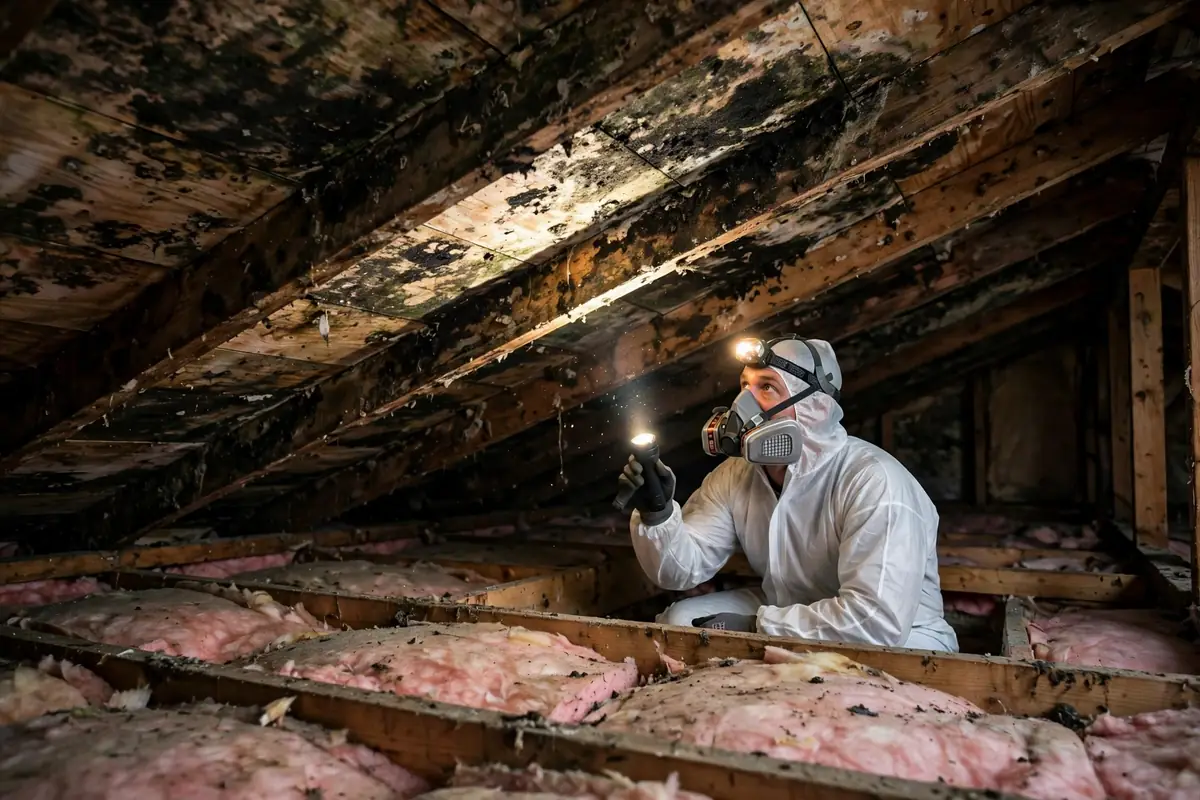
Attic mold removal in Nashville usually means removing contaminated insulation, cleaning and treating the roof decking and rafters, drying the space, and fixing the ventilation or roof leak that fed the growth. The cleaning is the middle of the job. The moisture source decides whether it stays done.
A Nashville attic lives a hard life. Summer heat bakes it by day while humid air works in from every soffit, and winter reverses the problem: warm, moist air leaking up from the living space meets a roof deck chilled from outside and condenses on the wood. The decking and rafters sit in that cycle for years, out of sight, which is why attic growth is usually widespread by the time anyone sees it. Often the first trace of mold in attic Nashville homeowners learn about is a photograph in an inspector's report, not a smell in a hallway.
The housing stock sets the details. Older homes in East Nashville, Inglewood and Germantown often pair small attic hatches with bathroom fans that were never ducted outside. Postwar ranches across Donelson, Madison and Hermitage have low pitched roofs where access is tight and insulation has drifted over the soffit vents. Newer builds toward Mount Juliet and Smyrna have better venting on paper and the same fan mistakes in practice. The removal sequence is the same; the access, and the fix that follows it, are not.
Roof leaks, bathroom fans and the usual suspects
Roof leaks
The classic cause: water entering at a failed flashing, a lifted shingle or a nail that has worked loose, wetting the decking from above. A roof leak usually shows as growth in one defined area under the entry point, and it has to be repaired, or sealed by a roofer, before removal means anything. Growth spread evenly across the whole north slope, by contrast, almost never traces to a single leak.
Bathroom fans vented into the attic
The most fixable cause, and one of the most common. A bathroom exhaust fan that ends in the attic instead of outside delivers a shower's worth of steam to the roof deck every day, and in winter that steam condenses on the cold decking exactly where the fan outlet sits. Attic mold remediation Nashville scopes treat the fan as part of the job: the duct gets extended to a roof or gable vent, or the next cleaning is already scheduled by the weather.
- Soffit vents blocked by insulation. Attic ventilation works as a circuit: air in at the soffits, out at the ridge. Insulation pushed into the eaves during an install breaks the intake half, and the attic stops breathing even though the vents look fine from the ground.
- HVAC duct condensation. Cold ductwork running through a hot, humid attic sweats all summer. Torn duct insulation and leaky joints drip steadily onto the ceiling drywall and feed growth on the deck and joists nearby.
- Summer heat and humidity. Nashville air carries the moisture; a still attic holds it against the wood. Ventilation is what moves that air out before the deck can drink it in.
- Air leaks from the living space. Recessed lights, attic hatches and plumbing chases leak warm indoor air upward all winter. Sealing those leaks is prevention work, and it belongs in the same scope as the cleaning.
Found during a home sale, a renovation or an audit
Almost nobody inspects their own attic for mold. Attic growth surfaces at three moments: a home sale, when the buyer's inspector photographs the decking and the report lands in the middle of a negotiation; a renovation or roof replacement, when a contractor opens the space and stops work; and an energy audit, when a blower door test comes with a look at the insulation and vents. Each moment has a clock on it, which is why the first step is not a quote but a mold inspection that sizes the area, names the source and puts both in writing.
For a home sale in particular, the written report is what turns a scary photograph into a negotiable line item: this many square feet, this source, this fix. Where the parties want the species or the spore count on paper, that is a mold testing visit, separate from the removal quote. Sellers should know that attic mold found during a home sale is common enough in Nashville that agents and inspectors have a routine for it: document, scope, then decide who pays for which part. Attic mold remediation Nashville TN work on a sale deadline is routine for local providers, provided the scope is written before anyone argues about it.
Attic mold removal Nashville: what comes out, what gets cleaned
Attic work follows the material rule that governs every mold job: porous material that mold has grown into comes out, hard and structural material is cleaned and treated in place. The attic version of that rule puts insulation on the removal side of the line. Moldy insulation cannot be cleaned through its depth, it hides the deck and joists below it, and it holds moisture against the wood. The roof decking, rafters and trusses are the cleaning side: they are structural, they are not replaced for surface growth, and they clean well.
Access shapes the day. A walk up attic with flooring is a different job from a low ranch attic crossed joist by joist, and an honest scope says which one you have. Containment in an attic is simpler than in a living space but still matters: the hatch gets sealed during removal of insulation, and the house below is protected from what comes down.
- Usually removed. Contaminated insulation under and around the growth, and stored items that sat in the damp and cannot be cleaned. Removal is bagged at the hatch, not carried through the house loose.
- Cleaned and treated. Roof decking and sheathing, rafters, trusses and framing. Surface growth is removed, the wood is treated, and it is dried and checked before new insulation goes down.
- Stays. Structural wood. Mold on framing is a surface problem in nearly every attic case; a scope that prices replacing rafters or decking for ordinary growth deserves a second opinion.
- Always addressed. The moisture source and the ventilation circuit. An attic scope that ends at cleaning is a scope for doing this job twice.
Safe access and inspection
The crew enters safely, joists only underfoot, and maps the growth: which slopes, how many square feet, and which source the pattern points to.
Contain and remove insulation
The hatch is sealed, contaminated insulation comes out in bags, and the deck and framing underneath are exposed for cleaning.
Clean, treat and dry
Decking, rafters and trusses are cleaned and treated, then the attic is dried and the wood checked before anything is covered again.
Fix the ventilation
Fans are ducted outside, soffits are cleared, air leaks are sealed and the roof leak is repaired, so the cleaned attic stays a dry one.
Keeping the attic dry after the work
Prevention in an attic is four habits, none of them expensive next to a second remediation. Vent every bathroom fan and the range hood outdoors, through a proper vent, never into the attic or the soffit cavity. Keep the ventilation circuit balanced and open: soffits clear of insulation, with baffles where the roof meets the wall, and a ridge vent that can actually draw. Seal the air leaks from the living space, the hatch, the recessed lights and the plumbing chases, so winter air from the house stops condensing on the deck. And keep the roof itself maintained, because the cheapest attic mold is the roof leak caught at a flashing in spring rather than at a ceiling stain in October. The bathroom fan habit starts downstairs, and our bathroom mold removal page covers the fan sizing and run time that keep the steam out of the attic in the first place.
What attic work costs
Search attic mold removal cost Nashville TN and the answers scatter, because attic jobs are priced on area, access and how much insulation comes out. Published benchmark ranges are the honest reference points: most Nashville mold jobs run between $1,400 and $5,500 in published ranges, with a middle around $2,200, and standard remediation work is published at about $9 to $23 per square foot. The typical range of $750 to $3,500 published by one ranking local operator fits the smaller, contained attic sections. Two attic specifics move the number: contaminated insulation usually comes out, and new insulation is a separate line; and awkward access, a low pitch or no attic flooring, adds labor. One thing does not belong in an attic quote: encapsulation. That is a crawl space treatment, and an attic scope that lists it deserves a question. Every figure on this page is a published benchmark, not a price from this site; the full breakdown is in our mold remediation cost guide.
Licensing is worth one question on any attic quote. Tennessee has no standalone mold license. A home improvement license covers jobs from $3,000 to $24,999, jobs over $25,000 call for a contractor license with the S-Mold designation, and any license can be checked at verify.tn.gov. The work itself should follow the ANSI/IICRC S520 standard for mold remediation. A provider who can walk you through the scope line by line, including what is excluded, is the pattern to look for.
Common questions about attic mold
How much does attic mold removal cost in Nashville?
It depends on the area involved and how much insulation comes out. Published benchmark ranges put most Nashville mold jobs between $1,400 and $5,500, with a middle around $2,200, and standard work is published at about $9 to $23 per square foot. A small, contained attic section can land near the typical range of $750 to $3,500 that one ranking local operator publishes. Every figure is a published benchmark, not a price from this site: this service performs no work, and your number is the written scope a provider gives you after inspecting the attic.
Attic mold showed up in our home sale inspection. What happens now?
It is one of the most common attic stories, and it rarely has to end a sale. The usual path is a written inspection report that sizes the growth and names the moisture source, then a remediation scope that buyer and seller can price and negotiate against, with any ventilation or roof fix listed as its own line. Sellers sometimes complete the work before closing; sometimes the price adjusts instead. What stalls sales is an unscoped problem, so getting the inspection and the itemized quote done quickly matters more than arguing about the mold itself.
Does attic mold affect the air in the rooms below?
Less directly than most people fear. Attic air is designed to vent outward through the ridge and soffits, and the stack of the house works against spores settling downward. Some exchange does happen through ceiling leaks around light fixtures, pull down attic stairs and duct runs, which is why sealing those leaks is part of a proper fix. There is no honest basis for panic, and no honest basis for ignoring a large colony either: size it, remove it, and seal the paths, in that order.
Does homeowners insurance cover attic mold?
Usually not when the cause is a slow roof leak, a fan vented into the attic or years of poor ventilation. Insurers read those as gradual damage and maintenance, which policies exclude. Mold that follows a sudden covered event, storm damage that opens the roof in one night, stands a better chance, and even then payment is commonly capped by a mold sub-limit that runs from $1,000 to $10,000 per occurrence. Photograph the attic and the roof when you find the problem, and report any water event when it happens, not when the growth appears.
Can I spray the attic mold myself?
On a very small patch, the EPA guideline homeowners use is about 10 square feet, and even then the attic is a poor place to learn. Bleach does not work the way people expect on porous wood: the part that kills stays on the surface while the water in it soaks in and feeds the roots below. Attics add their own hazards: joist only footing, roofing nails overhead, and summer heat that can overwhelm a person quickly. If you do look yourself, wear a proper respirator, step only on joists, and stop at anything larger than a small patch.
Will attic mold come back if I skip the ventilation fix?
In most cases, yes, on a timeline set by the weather. Cleaning removes the colony that is there; it does not change the warm, damp air that grew it. A bathroom fan still venting into the attic adds moisture with every shower, and blocked soffits keep the roof deck cold and wet through winter. Remediation quotes should list the ventilation or roof fix as its own line item. A quote for cleaning alone is a quote for doing the job again.
An inspector's photo just landed in your inbox?
That photograph is the start of the job, not the end of the sale. Reach out now to connect with a local provider who will size the growth, name the source and put the fix in writing. Start from the mold remediation Nashville homepage for the full service, or read how to judge any firm in our guide to mold remediation companies in Nashville.
Get Help Now